Building the Foundation
Why the first decision in Collector Archives wasn't about vehicles at all. It was the design system, and the restraint that shapes everything built on it.
One of the first decisions I made while building Collector Archives had nothing to do with vehicles, records, workflows, or AI.
It was the design system.
That may seem like an unusual place to start, but Collector Archives is being built from the ground up. Before defining workflows, activities, reports, and the countless interactions that will eventually exist throughout the platform, I wanted to establish the foundation everything else would be built upon.
As I started thinking about the visual direction for the platform, I found myself looking beyond software for inspiration.
Over the years I’ve accumulated shelves filled with collector car books, auction catalogs, marque histories, restoration references, event programs, and automotive magazines. These publications all serve a similar purpose. They document, organize, and preserve information.
One publication I kept returning to was META, a motorcycle magazine whose editorial design I’ve admired for years.
What appealed to me wasn’t a particular font, color, or layout.
It was the restraint.
The photography had room to breathe. The typography established hierarchy without demanding attention. Every page felt intentional. Nothing seemed to exist simply to attract attention.
The design supported the story.
That observation became an important principle for Collector Archives.
The platform is designed to manage ownership history, provenance, restoration records, appraisals, inspections, photographs, financial records, and the countless documents that accumulate throughout a vehicle’s life. Many of those records may remain valuable for decades and, in some cases, generations.
Rather than creating another software dashboard filled with visual noise, I wanted the platform to feel closer to an archive, a catalog, or a collector publication. The goal was to create an environment where the vehicles, records, photographs, and stories remain the focus.
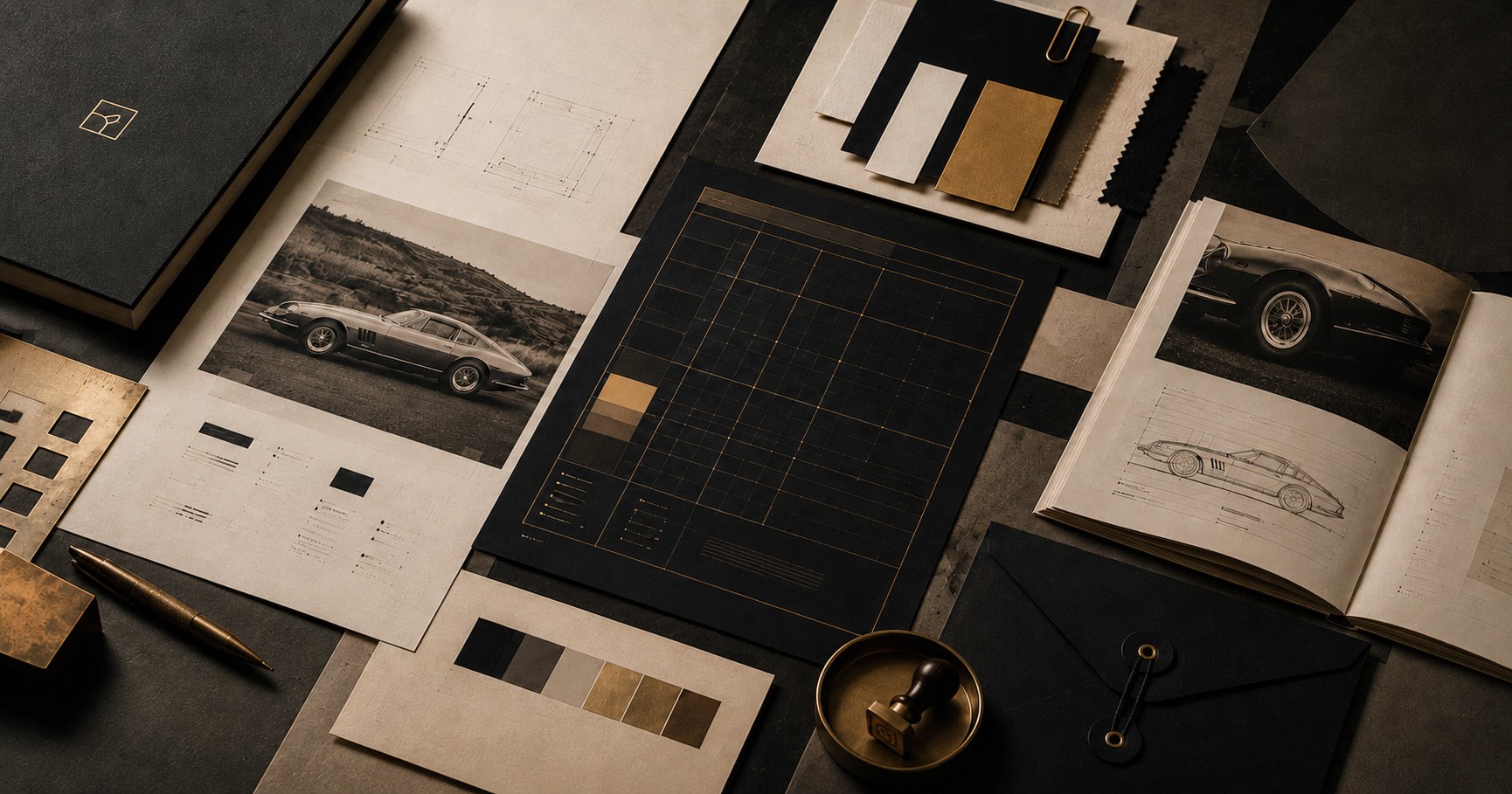
As the design system began to take shape, a few themes emerged naturally. A restrained color palette built around warm ink and paper tones. Editorial typography inspired by books and publications. Large-format photography. Generous spacing. A single brass accent used sparingly to create emphasis.
These decisions influence far more than appearance.
The design system establishes a common language for the platform. It affects how information is organized, how records are presented, how users move through the product, and how the platform communicates trust, permanence, and quality.
Most importantly, it creates a foundation for future decisions.
Every workflow, document, report, activity, story, and AI-assisted feature that follows will build upon the thinking established here.
This is only the beginning of the project, but it is an important milestone. Before an archive can exist, there must be a system capable of creating it.
Release Highlights
- Established the foundational Collector Archives design system.
- Defined the visual direction for the platform and website.
- Introduced the core color, typography, and layout framework.
- Unified the visual language across product and marketing experiences.
- Documented the first version of the design system.
Written by
Julia Rudisill
Founder of Collector Archives. Documenting the product strategy, information architecture, and ownership workflows behind building a platform for collector vehicle owners.